
What Probate Covers in McLennan County
Probate is the legal process of proving a will and settling an estate. It also covers guardianship of incapacitated adults and minors. The County Clerk's probate page explains that probate and guardianship cases do not deal with crimes or damages. They protect wishes, rights, and obligations regarding property when a person can no longer act due to death or incapacity. The County Judge hears the docket through Probate Court Services.
The County Clerk page covers probate cases, related search links, and legal-aid referrals.
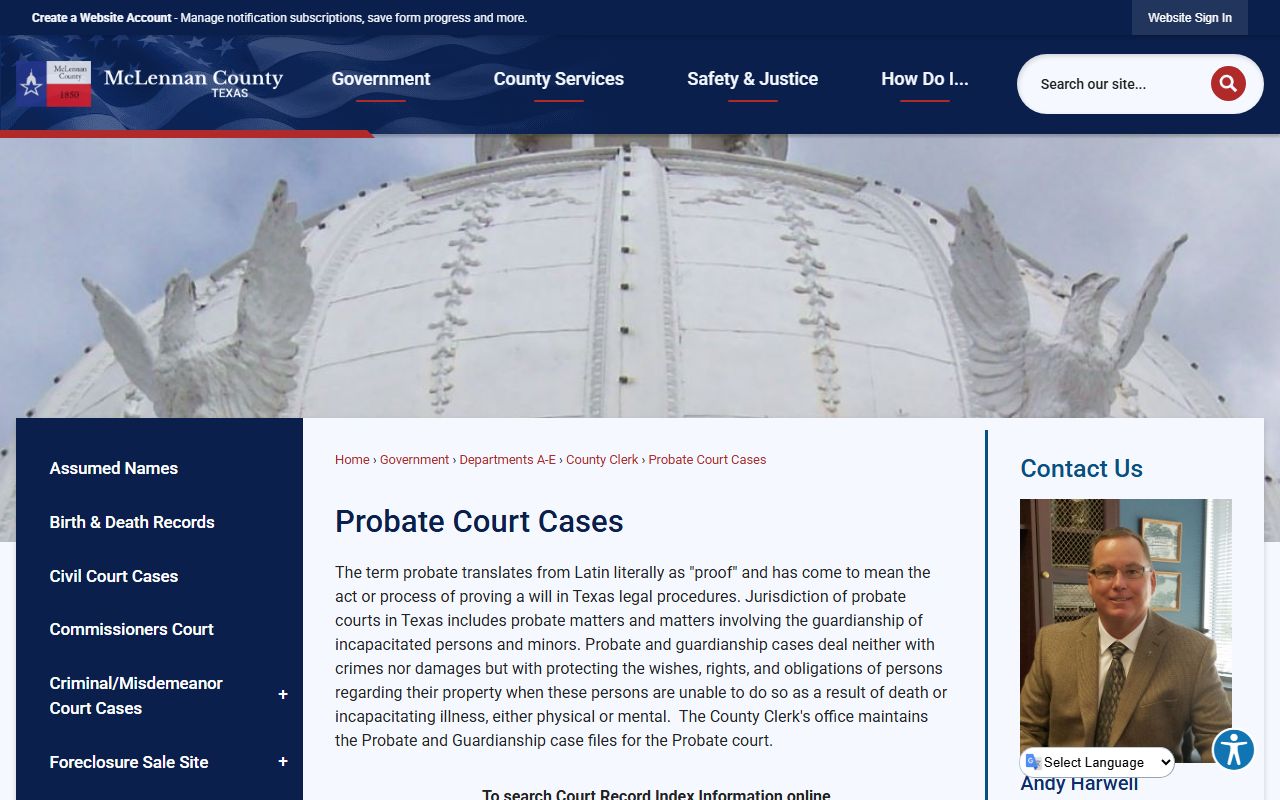
The page at mclennan.gov/181/Probate-Court-Cases sums up duties, search links, and the legal-aid referrals the clerk cannot replace.
Probate Terms Defined
Probate uses a small vocabulary that comes up over and over. Knowing the terms makes the case docket easier to read.
- Testator
- The person who made the will that is being proved.
- Executor
- The person named in the will to carry out its terms and manage the estate.
- Administrator
- A person the court appoints to manage an estate when there is no will or no named executor.
- Intestate
- Without a valid will; state law decides who inherits.
- Guardianship
- A court case appointing a person to manage the affairs of a minor or an incapacitated adult.
- Conservatorship
- A related role focused on managing money and property for a protected person.
How to Search McLennan County Probate Records
The County Clerk probate page links to a Court Index Search and an Attorney Case Portal. Public users go through the Court Index Search after a disclaimer. Attorneys with active local-bar membership use the Attorney Case Portal, which has more access. Search fields are not always fully exposed in the public page source, so accept the disclaimer and use the on-page search controls.
- Open the County Clerk probate cases page.
- Click into the Court Index Search and accept the disclaimer.
- Search by party or decedent name, with the cause number if known.
- Read the docket entries to find the file you need.
- Call the County Clerk probate department at 254-757-5186 for copies and fees.
The Texas Estates Code is the governing statute. Section 252 covers will probate and delivery.
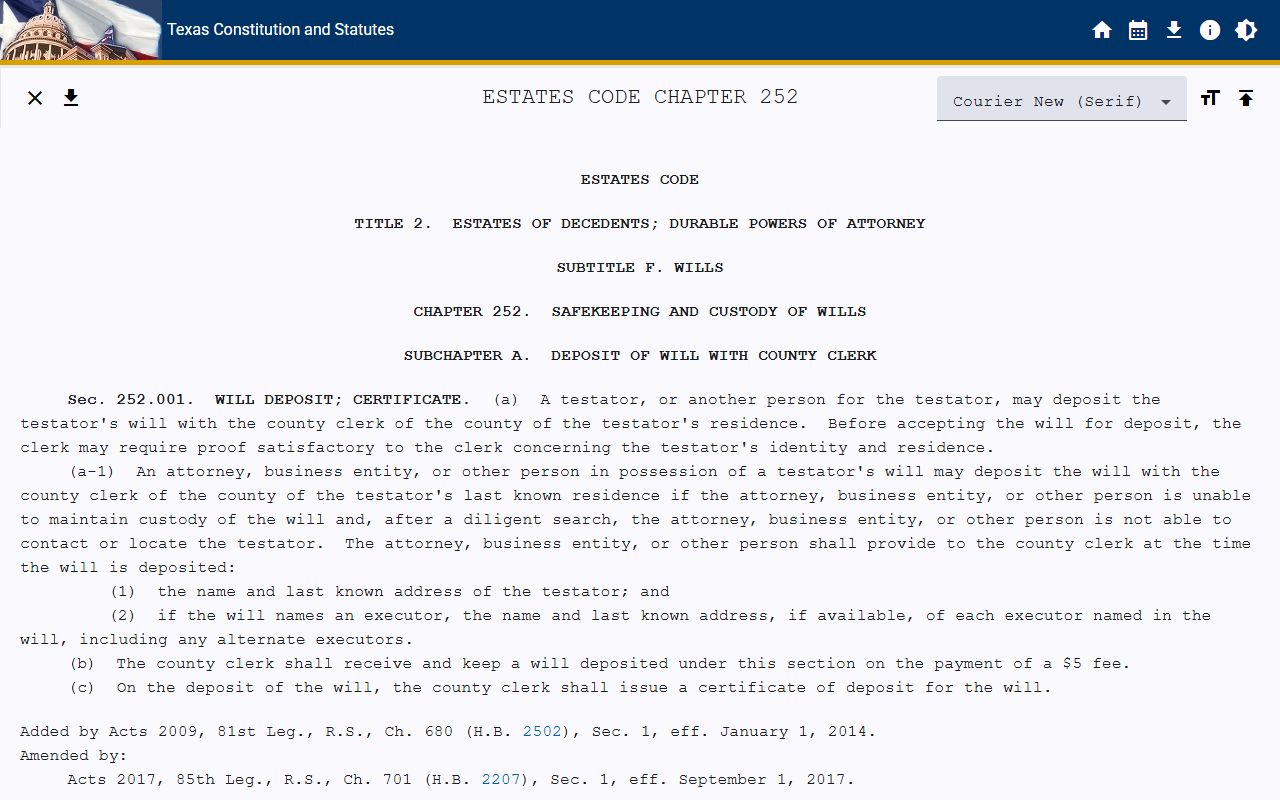
The statutes site posts the Estates Code at capitol.texas.gov, and the section sets out the basic rules for proving a will and delivering it to the court.
Probate Courts in McLennan County
McLennan County does not have a separate statutory probate court. The County Judge hears the probate docket through Probate Court Services, while the County Clerk keeps the case files. Two offices share the work, so a probate request often touches both.
Probate Court Services sits in the courthouse and runs the docket itself.
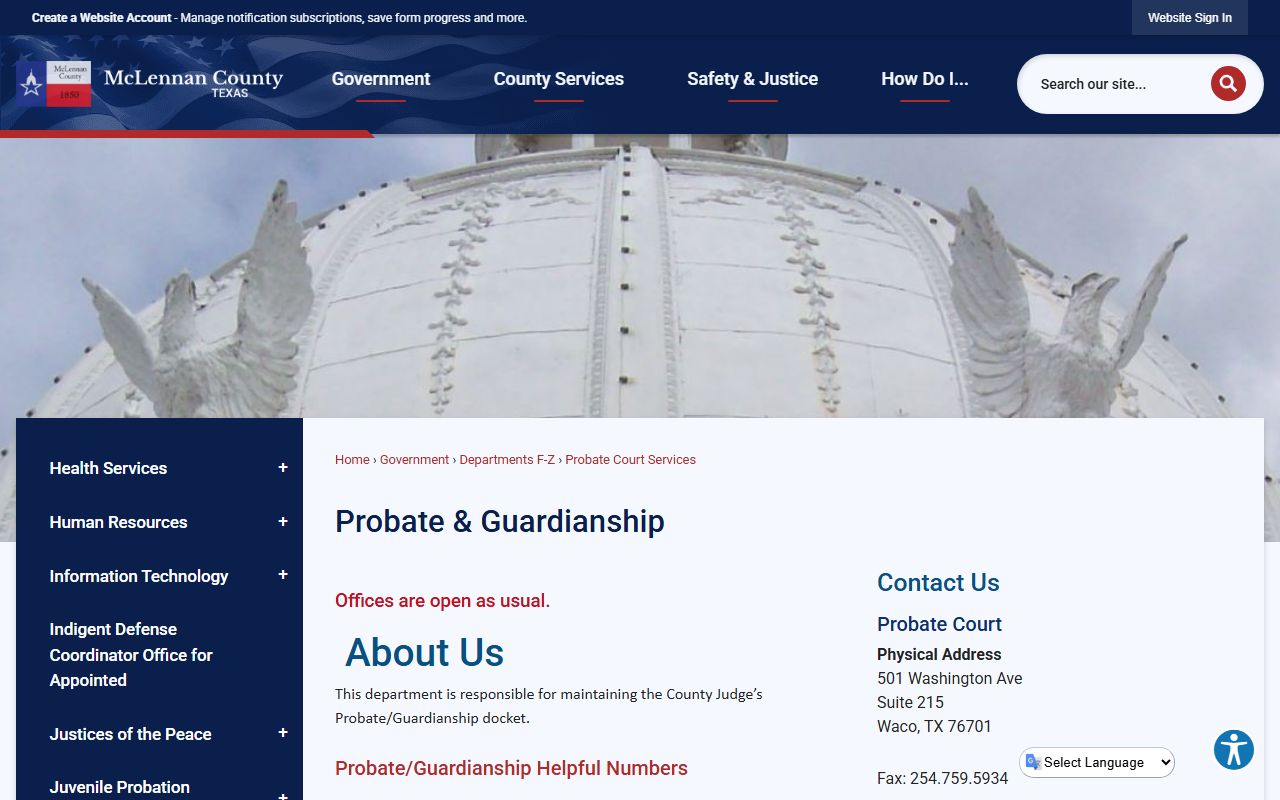
The Probate Court Services page at mclennan.gov/536/Probate-Court-Services lists the court coordinator and hearing-support contacts.
County Clerk Probate
215 N 5th Street, Room 201
Waco, TX 76701
254-757-5186
Fax 254-757-5146
Probate Court Services
501 Washington Avenue, Suite 215
Waco, TX 76701
254-757-5166
Fax 254-759-5934
Probate Filing Fees
The County Clerk probate page links a Probate Fee Schedule PDF for filing fees. Copy fees follow the regular County Clerk schedule of $1 per page plus $5 certification for certified items. Probate filings carry separate filing fees that vary by case type and the documents filed. The County Clerk probate desk can quote a current fee on the phone.
| Item | Amount |
|---|---|
| Plain copy per page | $1 |
| Certified copy per page | $1 plus $5 certification |
| Filing fees | Posted on the Probate Fee Schedule; varies by case type |
| Guardianship fees | Listed on the Probate Court Services FAQ |
Note: Probate filing fees change as state and local rules update, so confirm the current amount with the County Clerk probate desk before mailing payment.
What McLennan County Probate Records Show
A probate case file holds the decedent's name, the cause number, the applicant, an attorney of record, the filing date, and a list of orders and hearings. The will may be attached, along with proof of death, an inventory and appraisement, claims by creditors, and notice records. Guardianship cases include sensitive medical and personal details that may be limited from public view.
- Decedent name and cause number.
- Applicant and attorney of record.
- Filed will and proof of death.
- Order admitting the will to probate.
- Letters testamentary, administration, or guardianship.
- Inventory, appraisement, and list of claims.
- Notices to creditors and beneficiaries.
Restricted Probate Records
Some probate matters carry limits on public access. Guardianship cases often include medical reports and protected personal data, which are limited under state confidentiality rules. Minors are protected by separate rules covering identifiers and addresses. Sealed orders, when entered, do not appear in the public index. The County Clerk cannot give legal advice on a probate matter, so legal aid or a private attorney is the right next step for hard questions.
For local help, Lone Star Legal Aid at 254-756-7944, the State Bar Lawyer Referral Service at 800-252-9690, Texas Law Help, and the Texas State Law Library self-help portal are the resources the County Clerk pages name most often.
How Probate Works Locally
A McLennan County probate matter usually follows a clear set of steps. The applicant decides whether there is a will, an estate to administer, a small-estate process, or a guardianship need. The application is filed with the County Clerk probate department, with the proper filing fee or a fee-waiver request. Probate Court Services sets a hearing on the County Judge's docket. The applicant proves the will or shows the need for administration or guardianship. If the requirements are met, the court signs the order appointing an executor, administrator, or guardian.
After appointment, the clerk issues letters testamentary, letters of administration, or letters of guardianship. Required notices, an inventory, an appraisement, a list of claims, creditor handling, and final distributions all follow the Texas Estates Code and the court's orders. A simple uncontested probate can move within a few months; contested matters or guardianship reviews can take much longer.
Common probate filings include the application to probate a will, the will itself, proof of death, the order admitting the will, letters, the inventory and appraisement, a list of claims, notices to creditors and beneficiaries, and any guardianship reports and accountings. The clerk maintains the case file from start to close. The Probate Court Services coordinator helps with hearing scheduling and docket management while the County Clerk holds the formal record.
A small estate procedure can apply when an estate is modest, has no will, and meets statutory limits. The applicant files a small estate affidavit instead of opening a full administration. The clerk processes the affidavit, and a hearing may or may not be set. The Texas Estates Code lays out the rules, and the County Clerk probate department can confirm whether a given estate qualifies before any payment.