
Arrest Records in McLennan County
The McLennan County Sheriff's Office runs the main county jail off State Highway 6 in Waco. Each booking enters the agency system with a name, demographic detail, mugshot, offense, bond, and case agency. Most arrests in the county show up first in the hourly Current Inmate Listing or the online Mugshots app. The Sheriff posts both tools and says the inmate file updates once an hour. The mugshot data comes from public JSON that backs the public search app.
Arrest records are open, but the underlying court case file is held by a different office. Felony arrests move to district court, which means the District Clerk holds the file. Misdemeanor arrests move to the County Courts at Law, and the County Clerk holds those files. JP courts hear fine-only and traffic offenses. The full court trail for any single arrest may end up in more than one office, so plan a search that follows the case as it moves.
How to Search McLennan County Arrest Records
The Sheriff's Office is the first stop for current custody. The Current Inmate Listing is a PDF that updates hourly. The online Sheriff's Office page links to it, plus to mugshots, visitation, mail rules, and open-records requests. For broader background detail, the Texas Department of Public Safety keeps the statewide criminal-history file.
The state DPS Crime Records Service is where wider name-based criminal history searches happen. It also explains restricted-access and juvenile-sealing context. See the Texas DPS criminal records service.
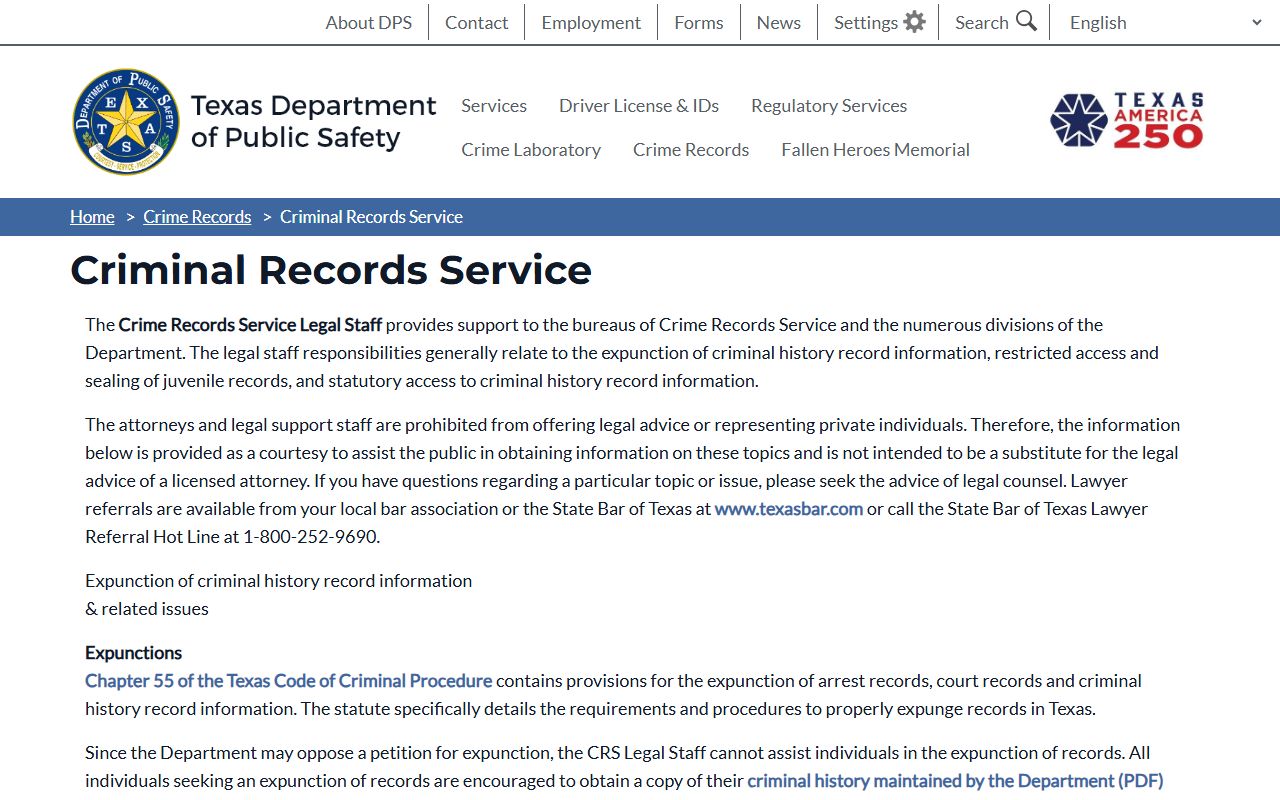
DPS handles statewide criminal history, expunction context, and restricted-access rules that shape what shows up in any name search.
- Check the McLennan County Sheriff inmate listing for current custody.
- Open the public Mugshots app and search by name, booking number, or book-in date.
- Read the offense, bond type, bail amount, and case agency on the result.
- For the court file, move to the District Clerk (felony) or County Clerk (misdemeanor) records page.
- For statewide criminal history, request a name-based check through Texas DPS.
Arrest Records vs. Criminal Court Records
An arrest record and a criminal court record cover different parts of the same case. An arrest record is the booking entry the Sheriff creates when a person enters jail. A criminal court record is the case file the clerk creates when charges are filed. The Sheriff's roster shows current custody data. The clerk's case index shows the charge as filed, the docket events, and the final disposition.
If you only want to know whether someone is in custody right now, the Sheriff's tools answer that. If you want the outcome of an old case, go to the clerk. The table below sums up the split.
| Feature | Arrest Record | Criminal Court Record |
|---|---|---|
| Office that holds it | Sheriff's Office | District Clerk (felony) or County Clerk (misdemeanor) |
| When it is created | At booking | When charges are filed |
| What it shows | Custody, charge, bond, case agency | Pleadings, motions, hearings, disposition |
| Where to search | Inmate listing PDF and mugshot app | Case index for the right court |
For the full case trail, see McLennan County court records.
Charges vs. Convictions
A charge is not a conviction. The arrest record shows a charge as the police see it at booking. That charge may be reduced, dropped, or replaced by another count when the prosecutor reviews the file. A conviction comes only after a court finds guilt, accepts a plea, or enters a judgment. Reading the disposition is the only safe way to know what really happened.
The District Attorney's Office, led by Josh Tetens, reviews felony cases and decides what to file. The DA also runs the Hot Check Department for bad-check matters. Office hours and contact are on the county DA page.
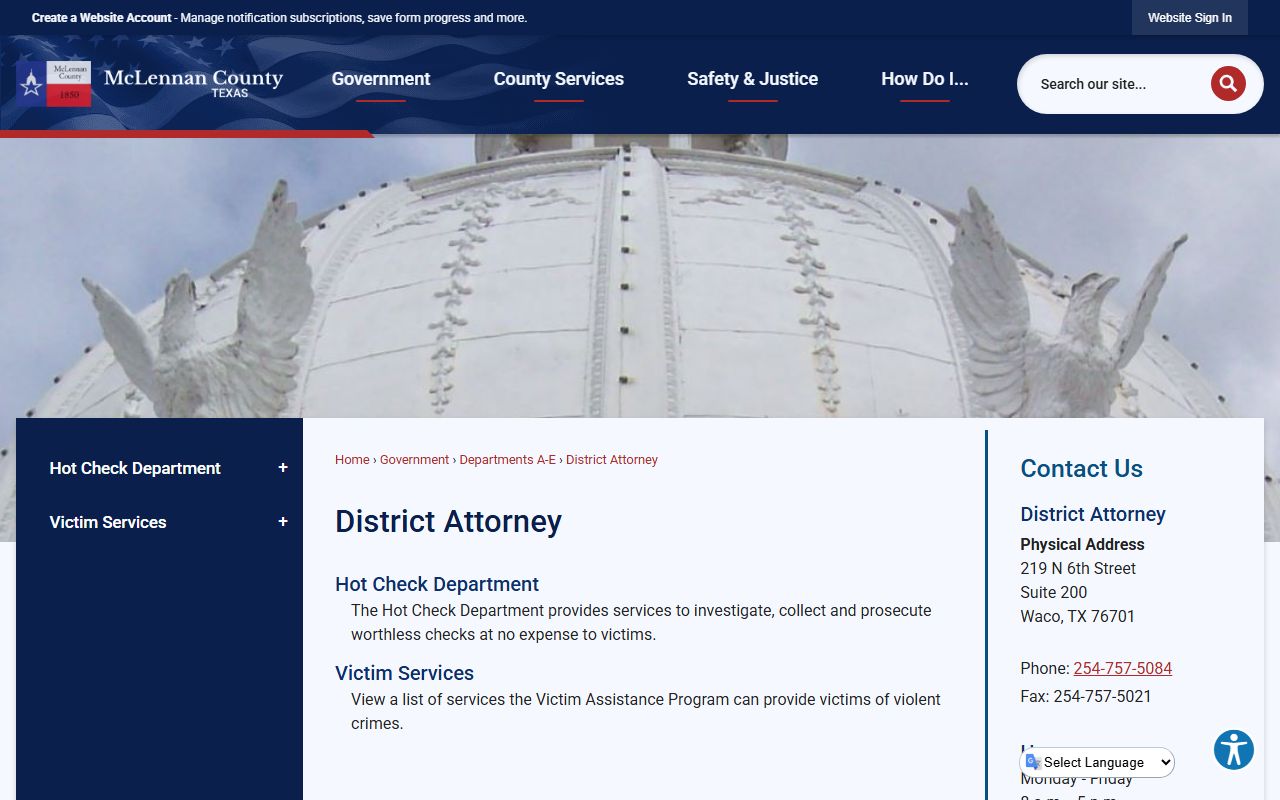
The DA's office in downtown Waco screens felony files and works specialty-court referrals with the defense bar.
| Feature | Charge | Conviction |
|---|---|---|
| Source | Arrest report and intake | Court judgment |
| Decision maker | Officer and prosecutor | Judge or jury |
| Status | An accusation, not proof | A finding of guilt |
| Public record | Yes, at booking | Yes, in the court file |
Sealed vs. Expunged Records
Texas uses two main remedies to clear a criminal record. Expunction destroys or removes qualifying arrest, court, and criminal-history records. Nondisclosure seals the record from most public view, but criminal-justice and listed agencies can still see it. The two remedies cover different cases and outcomes, and the difference matters a lot to anyone trying to clean up a past arrest.
Expunction is governed by Texas Code of Criminal Procedure Chapter 55A. The petition is filed in the proper court and lists every agency holding records. When the order is final, the clerk sends it to DPS, the Office of Court Administration, and the listed agencies.
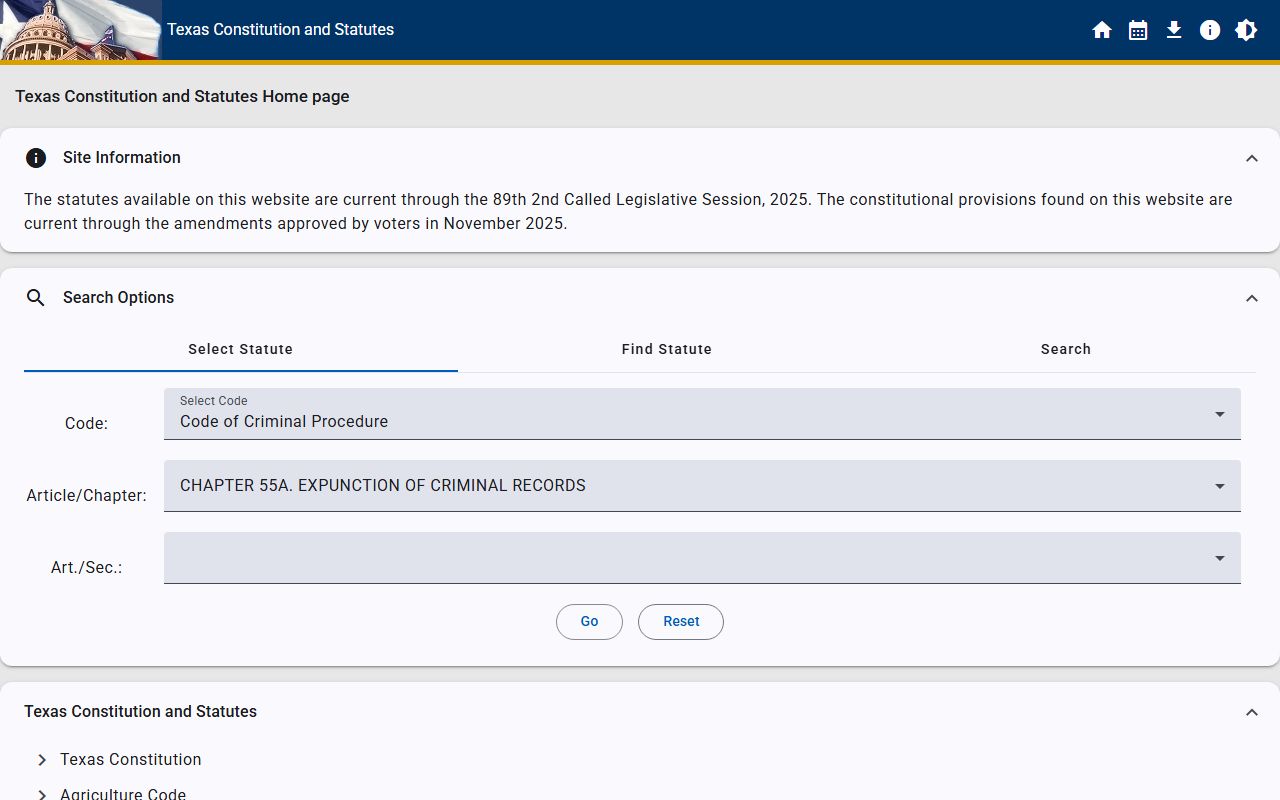
Chapter 55A spells out which arrests, acquittals, pardons, and qualifying outcomes can be expunged from public files.
Nondisclosure sits in Texas Government Code Chapter 411. It does not destroy the record. It limits public access while keeping the file open to criminal-justice and authorized agencies. DPS says its legal staff handles the dissemination side of expunction, restricted access, and sealing, but cannot petition for an individual.
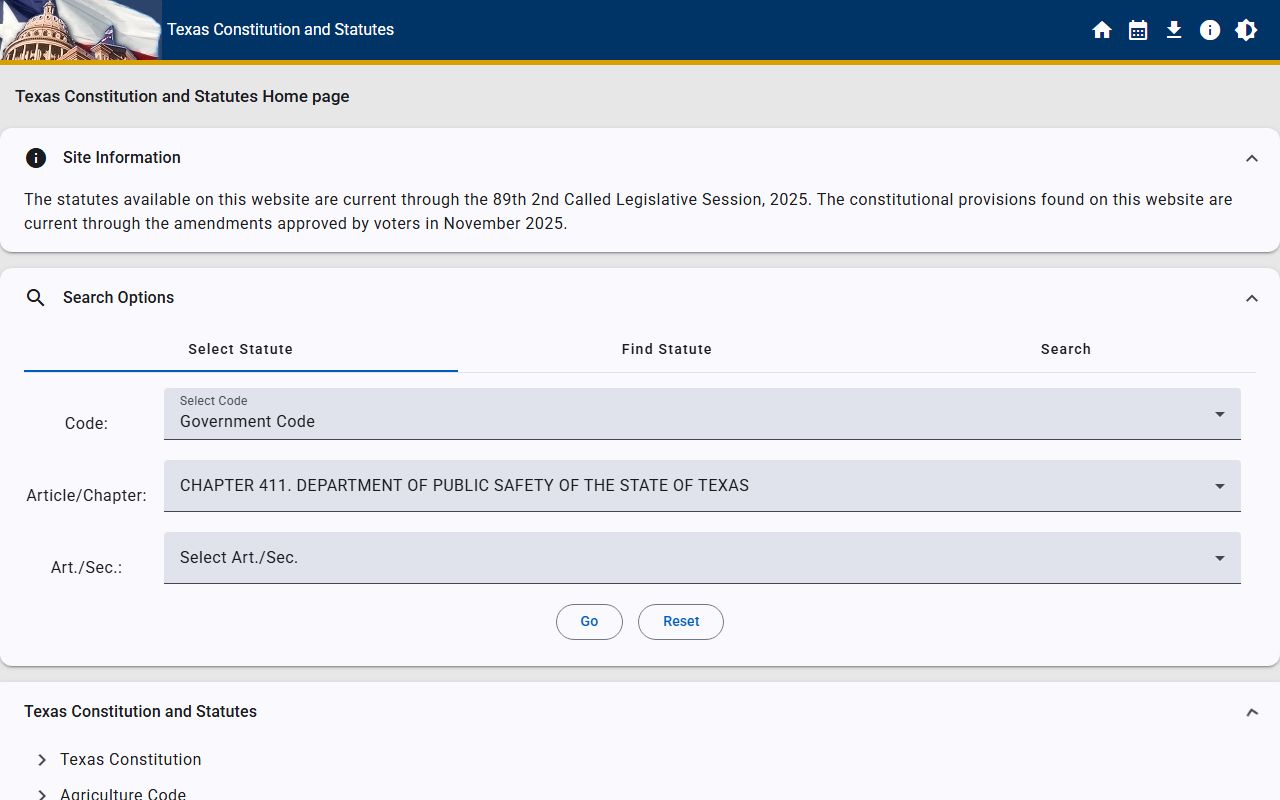
Chapter 411 governs who can see criminal history information and how orders of nondisclosure narrow that view.
| Feature | Sealed (Nondisclosure) | Expunged |
|---|---|---|
| Statute | Gov. Code Ch. 411 | Code of Crim. Proc. Ch. 55A |
| What happens to the record | Hidden from general public | Removed or destroyed |
| Who can still see it | Criminal-justice agencies | Only narrow retained items |
| Typical use | Probation done, qualifying offense | No conviction, acquittal, or qualifying outcome |
Mugshots and Booking Photos
The Sheriff's public Mugshots app shows the front-facing booking photo, the booking number, the offense, and the bond fields. Each record ties back to a CID, the county's inmate identifier. The Sheriff page also notes that the office makes every effort to produce accurate information and gives no warranties for use or interpretation. The Mugshots app does not show housing, next court date, or release date.
A booking photo is a public arrest image, not a sign of guilt. The image stays in the public file even if charges are dropped. People who want their mugshot taken out of public view usually need an expunction order, since the photo is part of the arrest record.
Statewide Criminal Records Search
A county-only search misses anything filed outside McLennan County. Texas runs two statewide tools that fill in the rest. The DPS Crime Records Service offers name-based criminal history checks, and the Texas Department of Criminal Justice offender search shows people in state prison or on state supervision. Federal custody is separate and runs through the Federal Bureau of Prisons.
TDCJ is the state corrections agency. Its offender search returns name, TDCJ number, race, sex, and current status for people in state custody. See the TDCJ offender information search.
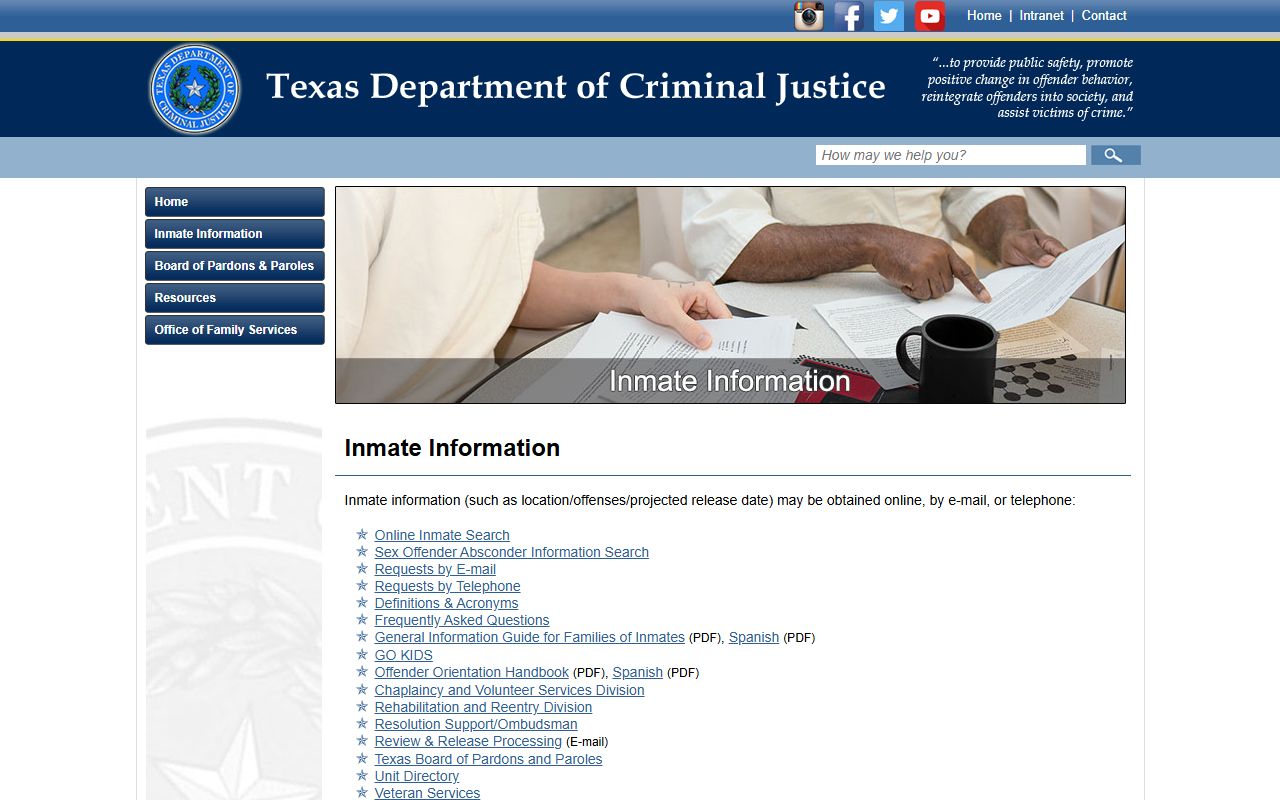
TDCJ covers state prison and parole status, which sits outside the county jail roster.
A McLennan County booking can lead to several handoffs. A person held on a state hold may transfer from the county jail to TDCJ. A person held on a federal warrant may transfer to federal custody, often through the U.S. Marshals Service. A recent U.S. Attorney release noted a defendant moved from McLennan County Jail to federal custody on an illegal reentry charge. So a name that no longer shows on the local roster may still be in custody somewhere else, and a state or federal locator may catch it.
For sex offender history, the Texas DPS public registry holds the statewide file with map, name, and address modes. The registry is a separate system from the criminal-history file, but both feed off DPS data.
Background Check Considerations
An arrest record is public, but using it as a background check is regulated. The Fair Credit Reporting Act limits how arrest and conviction data can be used for employment, tenant screening, credit, or insurance. Free public files and private background-check products are not the same. Even a clean public search can miss out-of-county or out-of-state records.
If you cannot afford a criminal-defense attorney, McLennan County uses an Indigent Defense Coordinator to appoint counsel. The office requires an in-person interview and an application appointment. Details and address sit on the county site.

The Indigent Defense Coordinator screens applicants and assigns counsel for qualifying criminal cases. The office is at 501 Washington Avenue, Suite 109, with phone 254-759-7540.
Free public file searches are also missing the context a private screener might add. Charge level, plea, and disposition matter a lot for employment and housing decisions, and a free search rarely shows the full record. A reasonable approach is to use the free public files for current custody and recent bookings, then ask the proper clerk for the case file before drawing conclusions. The clerk can confirm the disposition and any sealed or expunged outcome that the free index will not display.
Restricted Criminal Records in McLennan County
Some criminal records stay closed. Juvenile records follow Texas Family Code Chapter 58, and the 474th District Court is the county's designated juvenile court. Mental-health and CPS-related criminal matters are limited under separate confidentiality rules. Sealed and expunged records do not appear in the public index. Active investigative files may be withheld under Government Code section 552.108.
For DUI and DWI cases, the file moves to criminal court, which puts it in the District Clerk or County Clerk system depending on the level. For deeper traffic and DUI overlap, see traffic court records.