
What Is a Court Docket in McLennan County
A docket is a list. It records the events in a case in date order. Each line marks one thing the court or a party did, such as a filing, a hearing, a motion, an order, or a final ruling. The docket is not the file itself. The file holds the actual papers, the petitions, the motions, the exhibits, and the signed orders. The docket just tells you those things happened, and when. Lawyers and clerks also use the word docket to mean a court's calendar of upcoming settings. So a docket can be the history of one case, or the schedule of many cases for a given day.
In McLennan County, dockets live in different places by court. District courts keep felony, large civil, family, and juvenile dockets, and the District Clerk maintains those court records. County Courts at Law keep misdemeanor and county civil dockets, and the County Clerk maintains those. Justice of the Peace courts run their own dockets for traffic, small claims, and evictions. The same name can show up on more than one docket at once. For the full filed papers behind a docket line, see McLennan County court records.
How to Find McLennan County Dockets Online
The fastest public docket tool is the District Clerk Case Index Search. It feeds into the E-Doc Technologies portal. You accept a disclaimer, then search the index and open a free docket sheet. The county says coverage runs for criminal and civil cases from 2001 forward, with some converted legacy data from the early 1980s. The E-Doc page itself lists index information from 1984 forward. Only the index and docket sheet are online. The actual documents must be viewed in the office or ordered as copies. Start at the Case Index Search page, which explains coverage and links to both the public index and the attorney portal.
The public index page links to the E-Doc disclaimer screen, where you accept the terms before the search loads.
The District Clerk Case Index Search is the free public side of the system. It returns the index and the docket sheet for a case, not the filed images.
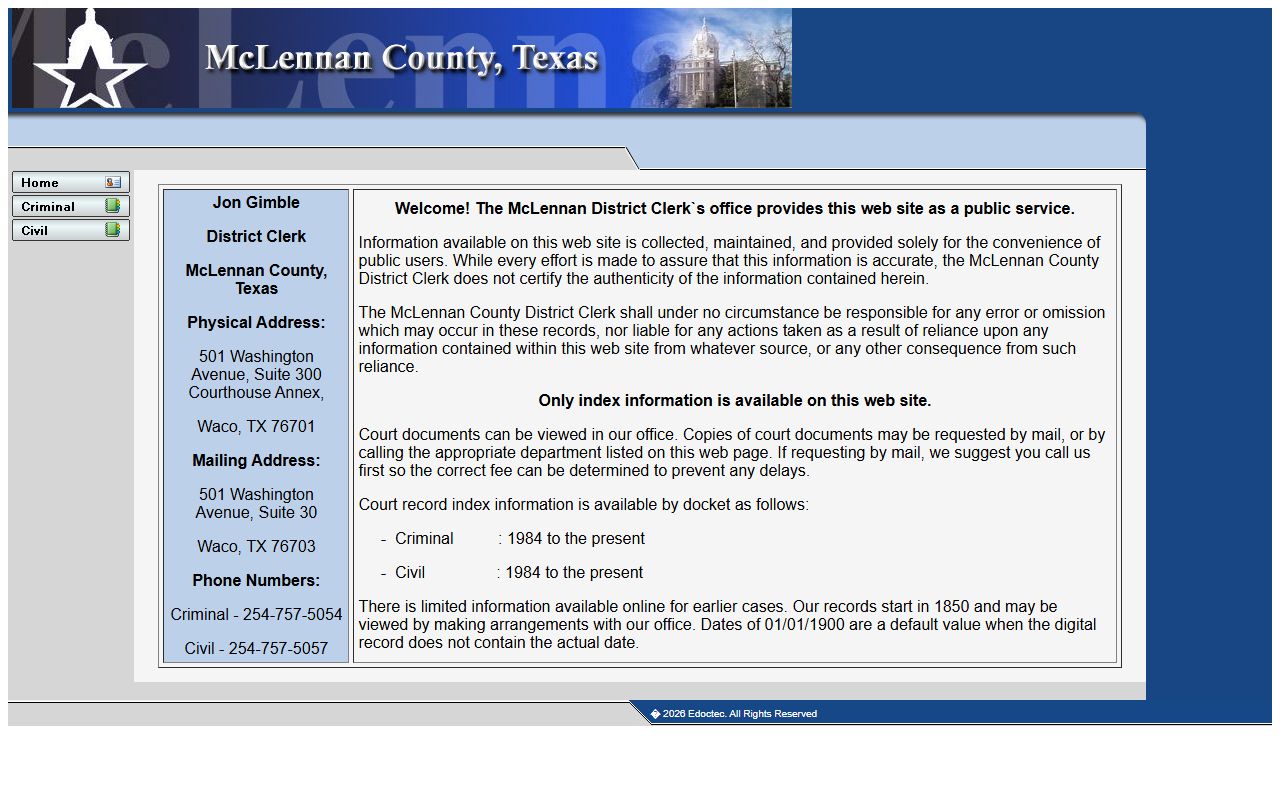
From that page you read the docket sheet line by line, then order copies if you need the underlying record.
- Open the District Clerk Case Index Search and accept the disclaimer.
- Pick the court type, then search by party name or by cause number. Enter names last name first.
- For a criminal name search, add the date of birth, which the District Clerk requires.
- Open the free docket sheet to read filings, settings, hearings, and the disposition.
- Order a copy or view the document in the office if you need the full filing.
Lawyers who belong to a local bar can use a separate tool with deeper access. The Attorney Case Portal is limited to active local-bar members, and general subscriptions are not offered to the public.
The District Clerk Attorney Case Portal sits behind a login and is not open to general users.
If you are not a local-bar member, use the free public index instead, which still shows the docket sheet for most district cases.
The McLennan County Daily Docket Case List
The county also posts a daily docket as a plain PDF. It is titled the McLennan County Civil District Clerk Daily Docket Case List. The file refreshes with the day's settings and shows the case, the court, and the attorneys tied to each matter. It is a quick way to scan what is set, without running a name search at all. The PDF is public and free. You can open it directly from the Daily Case Listing PDF at any time.
The daily list works best when you already know a case is set for the near term. It does not search by name or pull old cases. For history, the Case Index Search is the better tool. For one day's calendar, the daily PDF is faster. Note: a posted setting can move, since courts reset and continue cases often, so confirm a date with the court before you rely on it.
Sample McLennan County Docket Entry
A docket sheet groups several fields under one cause number. The cause number ties the file together, often in a year-number-court format such as 2025-1593-C1. From there you see the court, the parties, the attorneys of record, and a list of dated events. Hearing lines add a date, a time, a court, a judge, and a setting type. Criminal and civil files close with a disposition. The fields below show what a typical entry holds.
| Field | What It Shows |
|---|---|
| Cause Number | The court's unique case number, often a year-number-court format such as 2025-1593-C1. |
| Court | The assigned court, such as the 19th, 54th, 74th, 170th, 414th, or 474th District Court. |
| Parties | Plaintiff and defendant, petitioner and respondent, or the State of Texas and the defendant. |
| Attorney of Record | The lawyer listed for each side; the daily docket PDF commonly names the attorneys. |
| Docket Entry | One dated event, such as an indictment, filing, motion, plea, order, or judgment. |
| Hearing Setting | The date, time, court, judge, and setting type, such as pretrial or status docket. |
| Disposition | The outcome, such as dismissed, convicted, or judgment entered. |
| Financial Fields | Court costs, fines, fees, bond, or bail amounts tied to the case. |
Note: a filing date of 01/01/1900 is often a default value, used when the digital record does not hold the actual date.
Courts That Publish Dockets in McLennan County
McLennan County runs a split court system, so dockets come from several courts. Six district courts sit in the downtown courthouse complex. Three County Courts at Law sit there too. Five Justice of the Peace precincts handle local matters across Waco, West, and McGregor. Each court keeps its own docket, and the right clerk maintains the underlying file. The list below maps the main courts to what they docket.
- 19th District Court - felony and general jurisdiction matters; criminal cases assign to the 19th and 54th at random.
- 54th District Court - felony criminal cases only, with set pretrial and status docket rules.
- 74th, 170th, 414th District Courts - civil and family dockets, including divorce and large civil suits.
- 474th District Court - civil and family work, plus the designated juvenile court and CPS referring court.
- County Courts at Law 1, 2, 3 - misdemeanor criminal and county civil dockets, kept by the County Clerk.
- Justice of the Peace courts - traffic, small claims, debt, and eviction dockets in five precincts.
County misdemeanor dockets run through the County Clerk, who reports that thousands of misdemeanor cases close at the county level each year. The misdemeanor desk also points felony questions back to the District Clerk. You can read the County Clerk's role on the misdemeanor court cases page.
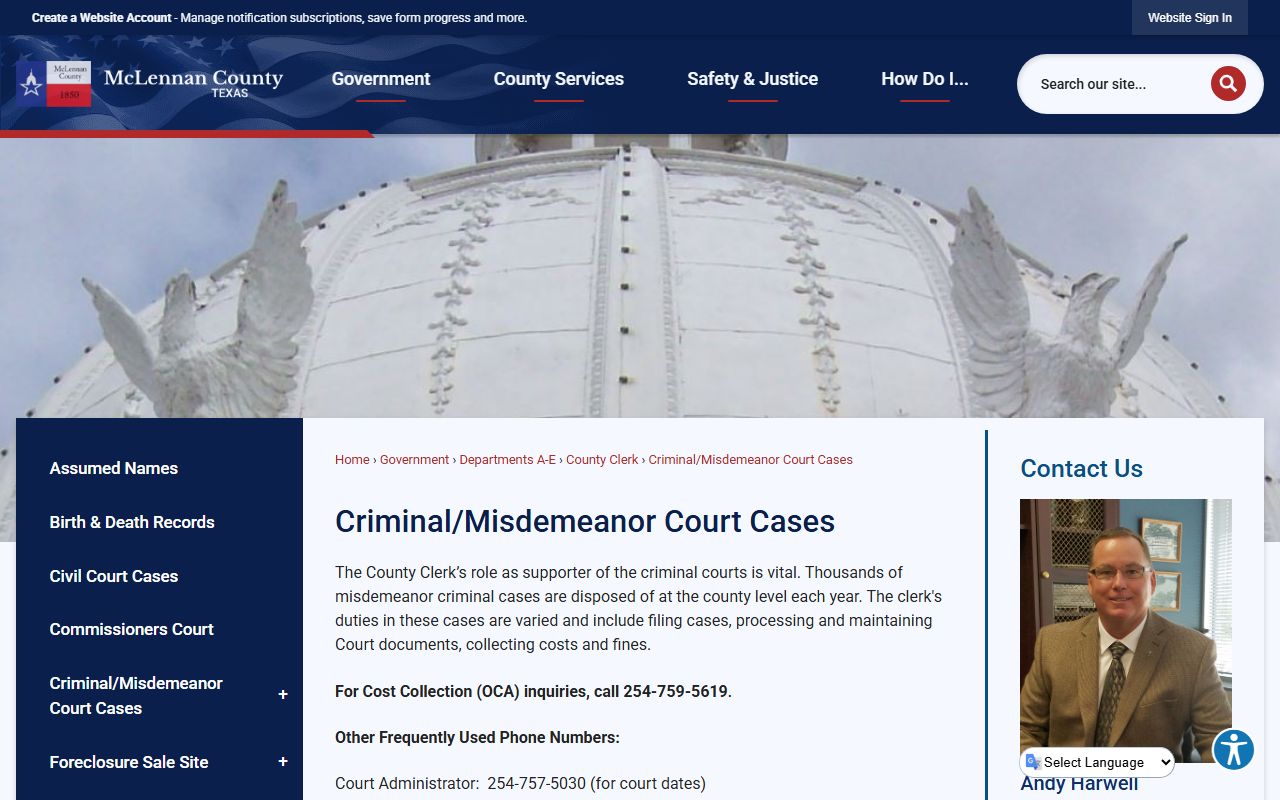
That page lists the cost-collection and court-date contacts tied to county-level criminal dockets.
Justice courts add a large share of the county's docket volume. JP Precinct 5 alone hears criminal, civil, traffic, debt, small claims, eviction, truancy, and juvenile matters, plus magistrate work and arrest warrants. Each precinct posts its own contacts and case types. See the Justice of the Peace Precinct 5 page for one example of the range.
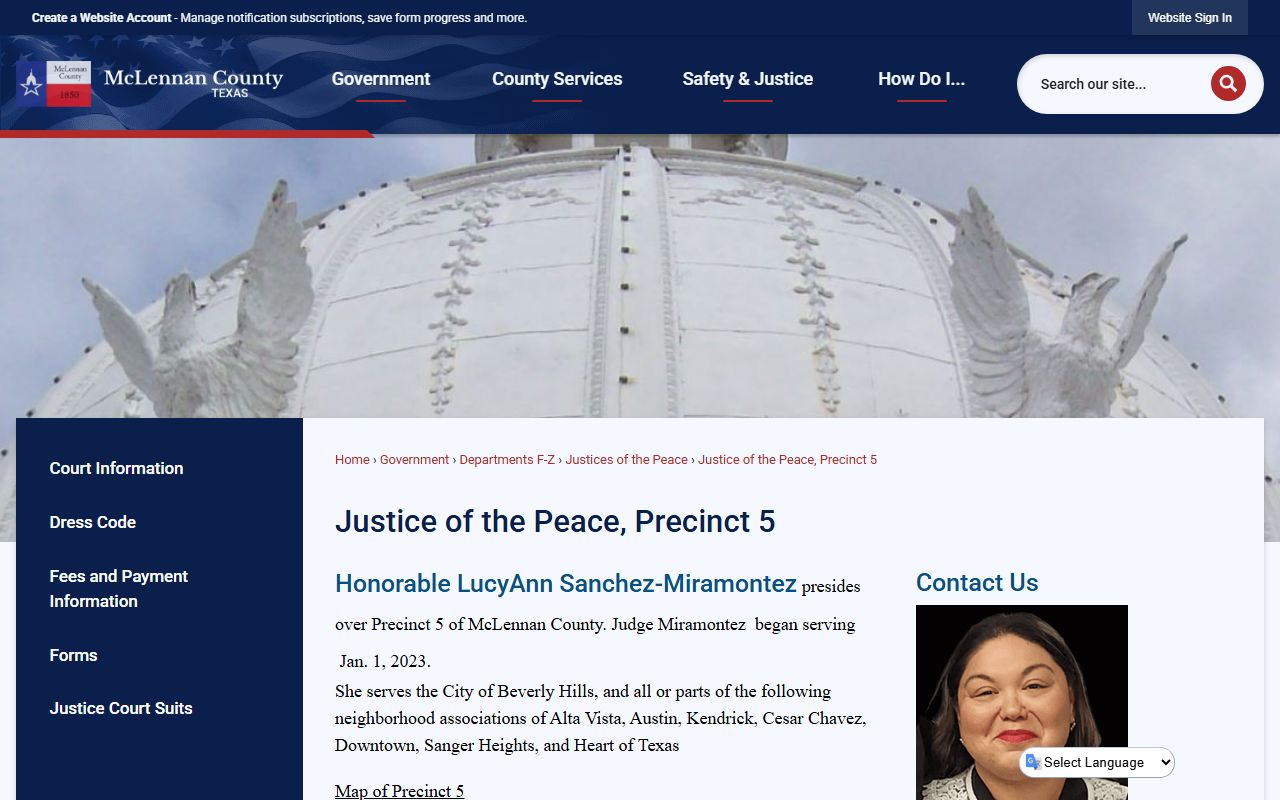
JP dockets are not all in one search portal, so you often check the precinct that serves the address or the citation.
District Court Docket Practices
District courts in McLennan County set their dockets on a weekly cycle, and the rules vary by court. The 54th District Court hears felony criminal cases only, and its docket culture is spelled out clearly. The 54th holds a pretrial docket call for the third upcoming week at 9:30 a.m. A status docket for the second upcoming week follows the pretrial, and all assigned attorneys must be present. For a defendant who sits in jail, the attorney must appear by Zoom or in court. These rules keep the felony docket moving and cut down on empty settings.
Other courts run their own mix. The 74th handles complicated civil trials, multiparty civil cases, and significant family matters. The 170th, 414th, and 474th carry civil and family work, with the 474th doubling as the juvenile court. Several courts post online docket notices and standing orders on their county pages. A divorce or family suit filed after May 5, 2008 also falls under a Standing Order Regarding Children, Property and Conduct, except in Attorney General and CPS cases.
Settings move. Courts reset cases, grant continuances, and shift dockets as trials run long or settle. A pretrial date can become a plea date, and a status docket can lead to a trial setting weeks out. Always confirm the live date with the court coordinator before you show up. For court-by-court contacts and addresses, see McLennan County district court.
Docket vs. Full Case Record
People mix up the docket and the case file all the time. The docket is the index of events. The full record is the stack of actual documents behind those events. The docket tells you a motion was filed on a date. The full file holds the motion itself, with its text, exhibits, and the judge's ruling. In McLennan County, the free online index shows the docket. The filed images are not online. You view them in the office or order copies from the proper clerk. The table sums up the split.
| Docket | Full Case Record | |
|---|---|---|
| Format | List of dated entries | Full filed documents |
| Access | Free online docket sheet | View in office or order copies |
| Cost | No fee to view the index | $1 per page, plus a $5 search fee when the cause number is unknown |
| Use | Track case progress and settings | Legal review, evidence, certified copies |
So the docket answers what happened and when. The full record answers what was actually said and ruled. For most quick checks, the docket is enough. For a court filing or a legal decision, you want the certified document from the clerk.
How to Read a McLennan County Docket
Docket lines use shorthand that can trip up a first-time reader. Some terms come up again and again across criminal, civil, and family dockets. A short glossary helps you read a sheet without guessing. The terms below show up on most McLennan County docket sheets.
- Setting
- A scheduled court date, such as a pretrial, status, or trial setting.
- Pretrial
- A hearing before trial where the court takes up motions, pleas, and scheduling.
- Status docket
- A check-in setting where the court reviews where a case stands and what is next.
- Disposition
- The outcome line, such as dismissed, convicted, or judgment entered.
- Continuance
- An order that moves a setting to a later date.
Watch the disposition line, since it tells you the real result. A charge is not a conviction. An entry can show that a motion was filed without showing how the judge ruled, so you read down to the order or judgment. Bond, bail, fines, and court costs show as financial fields. A capias or warrant line means the court issued a hold. When a date reads 01/01/1900, treat it as a default placeholder, not a real event date.
Criminal dockets follow a case from indictment through plea or trial to sentencing. Civil and family dockets run from the petition through motions and hearings to the judgment or decree. Justice court dockets move faster and close with a judgment, a fine, or a dismissal. If a line confuses you, the clerk that holds the file can confirm what it means, though clerks cannot give legal advice. For criminal-case specifics, see arrest records, and for citation dockets, see traffic court records.
Courtroom Etiquette for Docket Settings
If your case is on a docket, you may need to appear, and the courts set dress and conduct rules. Several district court pages prohibit shorts, tank tops, hats or caps for men, and bare feet. Some courts also bar children under 7 or unattended children. All visitors pass through security to enter the courthouse. Arrive early to clear the line and reach the right courtroom before your setting is called.
Plan the building, not just the date. The District Clerk's office sits on the third floor of the annex, next to the sky bridge, and handicap access runs through the alley entrance between the courthouse and the annex. Spanish-language services are available in the District Clerk's Office. When a docket calls for a remote appearance, follow the court's Zoom instructions, which the 54th uses for in-jail defendants' attorneys.