
How to Search McLennan County Court Records
No single system covers every court in McLennan County. Records split by court type and by clerk. District civil and criminal cases run through the District Clerk Case Index Search, which feeds into the E-Doc Technologies portal. County-level official public records, deeds, and marriage records live in the County Clerk's Tyler Self-Service portal. County civil, misdemeanor, and probate court files use the County Clerk Court Index. A daily docket is posted as a public PDF.
Before you start, gather a few basics. Have the full party name, and enter it last name first. A case or cause number speeds things up a lot. Criminal name searches at the District Clerk also need a date of birth. Court documents are not all online. The index is free, but most images must be viewed in the office or ordered by copy request.
The county homepage is a good launch point, with quick links to dockets, case search, the inmate list, mugshots, and marriage records. See the official McLennan County website for the full set of links.
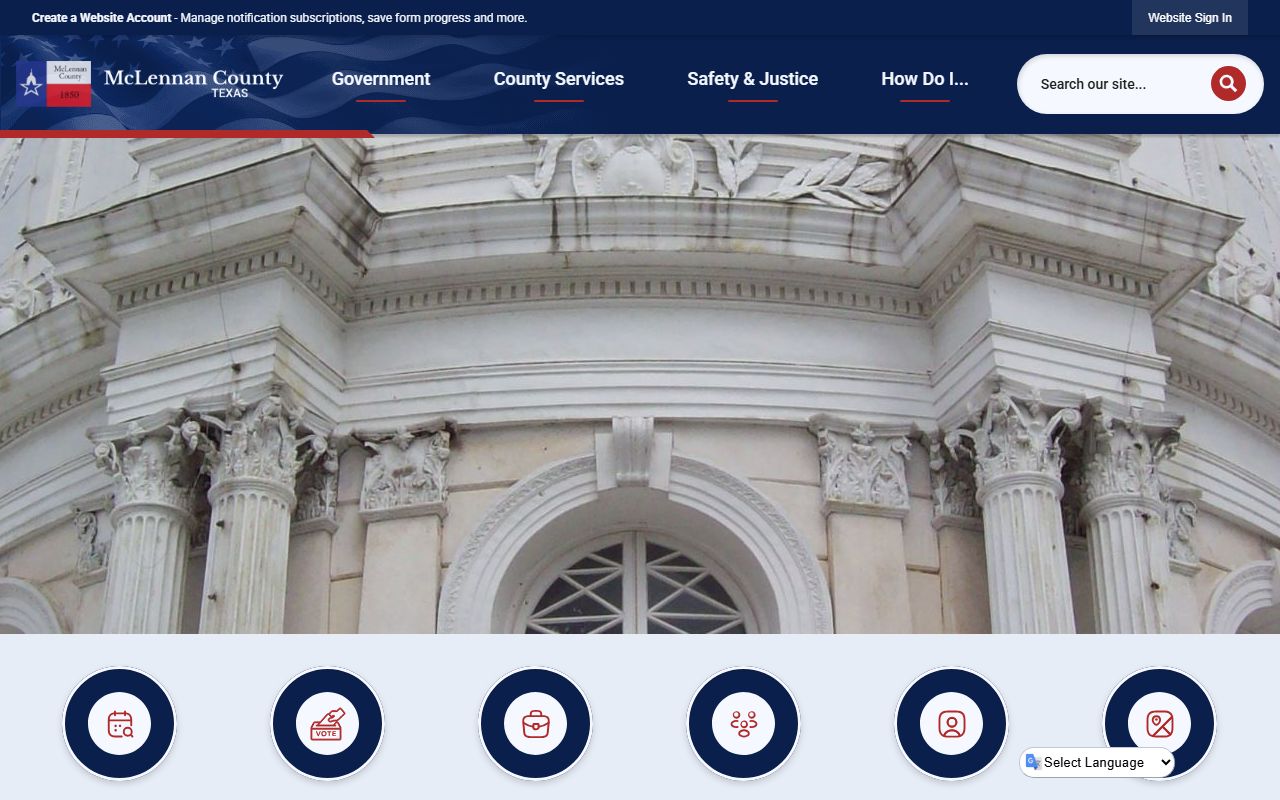
From that page you can reach the District Clerk case index, the County Clerk records portal, and the Sheriff's inmate tools in a click or two.
- Decide whether the record is district-level, county-level, justice court, jail, or an official public record.
- For district civil or criminal cases, open the District Clerk Case Index and accept the disclaimer to reach the E-Doc portal.
- Search by party name (last name first) or by cause number, then narrow by court and date.
- Review the free docket sheet, which lists filings, hearings, and the disposition.
- Order a copy or certified copy from the proper clerk division if you need the actual document.
The County Clerk's official public record portal uses a clear set of search fields. The table below lists what the Tyler Self-Service search accepts.
| Field Label | Type | Required | Notes / Format |
|---|---|---|---|
| Either Name | Text (autocomplete) | No | Enter individuals last name first, such as Smith James. |
| Grantor | Text | No | Person or party giving an interest. |
| Grantee | Text | No | Person or party receiving an interest. |
| Recording Date Start / End | Date | No | Format mm/dd/yyyy with a date picker. |
| Document Number | Text | No | Free text for a specific filing. |
| Book / Volume / Page | Text | No | Used for older book-and-page records. |
| Document Types | List | No | Choose deed, lien, marriage, and more. |
| Use Advanced Name Searching | Checkbox | No | Turns on wildcard and fuzzy name tools. |
The McLennan County Judicial System
Texas uses a split trial-court system, and McLennan County follows it. District courts are the main general-jurisdiction trial courts. They hear felony crimes, large civil suits, family cases, and juvenile matters when assigned. County Courts at Law handle misdemeanors and county civil cases. Justice of the Peace courts take small claims, evictions, and fine-only traffic and Class C offenses. The County Judge, through Probate Court Services, runs the probate and guardianship docket.
Appeals from McLennan County district and county courts usually go to the Tenth Court of Appeals in Waco. Federal cases are separate. They are heard in the Waco Division of the U.S. District Court for the Western District of Texas, with appeals to the Fifth Circuit.
Case flow: Justice Court › County Court › District Court › Court of Appeals
| Court | Jurisdiction | Case Types |
|---|---|---|
| District Courts (19th, 54th, 74th, 170th, 414th, 474th) | General jurisdiction trial court | Felony crime, large civil, divorce, family, juvenile |
| County Courts at Law 1, 2, 3 | Statutory county jurisdiction | Misdemeanors, county civil disputes |
| Justice of the Peace (5 precincts) | Limited local jurisdiction | Small claims, evictions, traffic, Class C |
| Probate Court Services | County Judge probate docket | Wills, estates, guardianship |
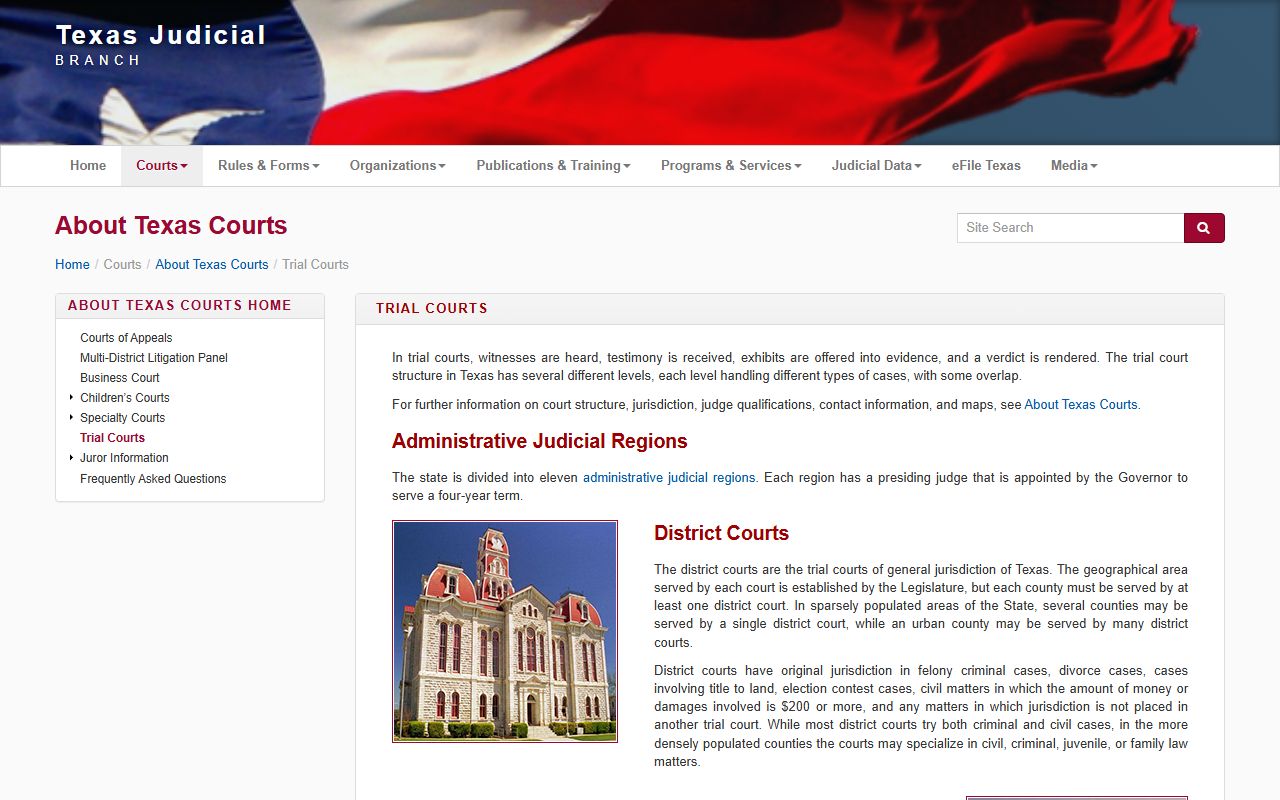
The Texas Judicial Branch site explains how these levels fit together statewide. The trial court structure page sums up which court hears what.
McLennan County's six district courts and three county courts at law all sit in the downtown courthouse complex on Washington Avenue.
McLennan County Courthouses
The main courthouse complex stands in downtown Waco. The District Clerk, County Courts at Law, and Probate Court Services share the courthouse and annex on Washington Avenue. The County Clerk's recording, marriage, and court-record desks sit a short walk away on North 5th Street. Each office keeps its own records and its own phone line, so it helps to know which one you need before you go.
District Clerk (Annex)
501 Washington Avenue, Suite 300
Waco, TX 76701
254-757-5057
County Clerk (Recording & Marriage)
215 N 5th Street, Room 223
Waco, TX 76701
254-757-5078
Types of Court Records Available in McLennan County
McLennan County court records run across several courts and two clerks. Felony and district civil files belong to the District Clerk. Misdemeanor, county civil, marriage, and probate files belong to the County Clerk. Justice courts keep their own traffic and small-claims records. The mix means the same person could have records in more than one office.
Here are the main record types and which office holds them.
- Criminal records - felony files at the District Clerk, misdemeanors at the County Clerk.
- Civil records - district civil with the District Clerk, county civil with the County Clerk.
- Family and divorce records - district court files kept by the District Clerk.
- Probate records - wills, estates, and guardianship kept by the County Clerk.
- Traffic records - fine-only and Class C cases in the Justice of the Peace courts.
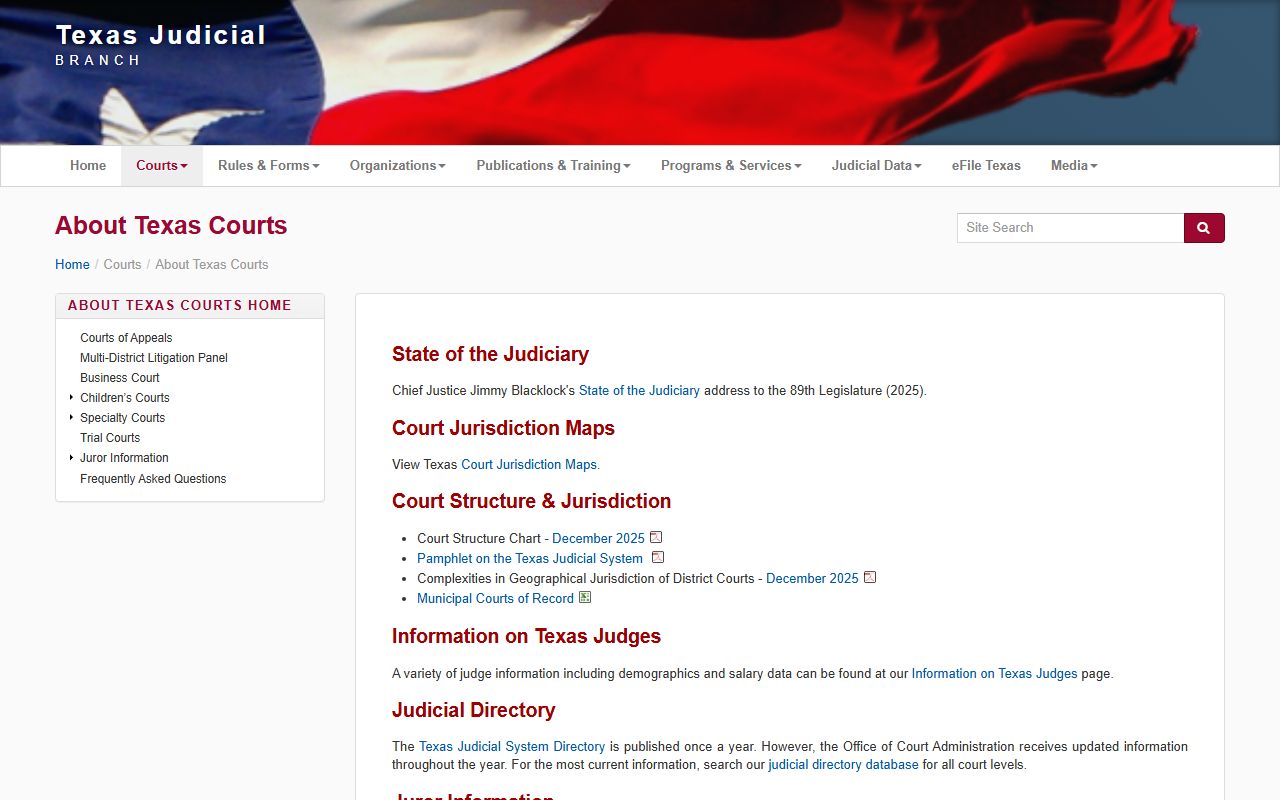
The state judicial branch overview is a useful primer on how these courts and records connect. See the Texas Judicial Branch overview for the full picture.
The chart below compares the three trial-court levels most McLennan County searchers run into.
| Feature | District Court | County Court at Law | Justice Court |
|---|---|---|---|
| Clerk of record | District Clerk | County Clerk | Justice court clerk |
| Main case types | Felony, big civil, family | Misdemeanor, county civil | Traffic, small claims, eviction |
| Civil dollar limit | No fixed cap | Mid-range civil | Up to $20,000 |
What McLennan County Court Records Show
A McLennan County case record holds the basic facts of the matter. You will see the cause number, the court, the parties, and a list of docket events. Criminal files show the charge, plea, and disposition. Civil and family files show the petition, motions, orders, and the final judgment or decree. Probate files show the will, the applicant, and the orders. Some fields are redacted, such as Social Security numbers and minor names.
| Field | What It Shows |
|---|---|
| Case Number | The court's unique cause number, often a year-number-court format such as 2025-1593-C1. |
| Filing Date | The date the case opened. A date of 01/01/1900 can mean an unknown default date. |
| Parties | Plaintiff and defendant, petitioner and respondent, or the State of Texas and the defendant. |
| Charges / Cause | The criminal charge or the civil claim that started the case. |
| Disposition | The outcome, such as dismissed, convicted, or judgment entered. |
| Sentence / Judgment | The penalty or the final ruling, including fines, probation, or money awards. |
Public Access Laws for McLennan County Court Records
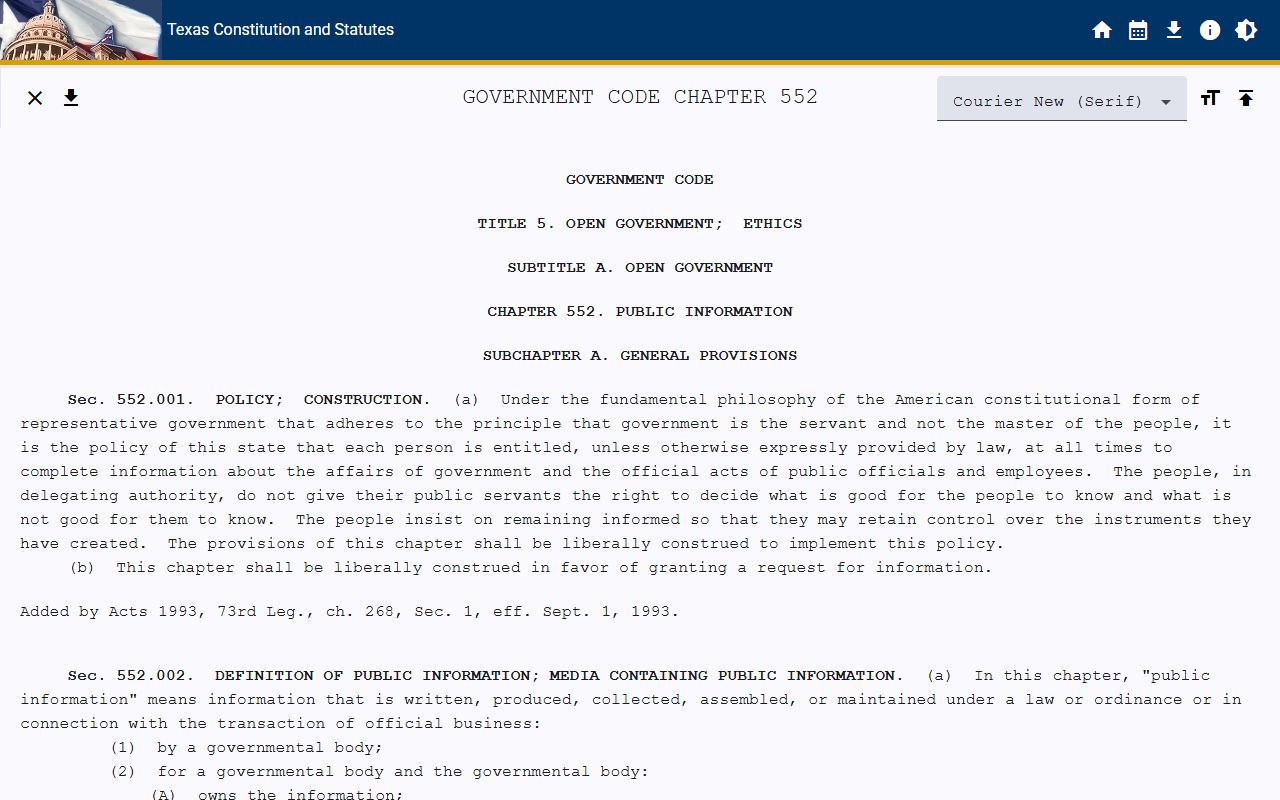
Texas does not use one rule for every record. County government records, such as sheriff files and budgets, fall under the Texas Public Information Act in Government Code Chapter 552. Court case files are different. Government Code section 552.0035 says judiciary records are governed by court rules, not the Act. So a district court file follows clerk procedures and court rules, while a sheriff open-records request follows the Act. Most court records are open, but many categories stay closed by statute.
The Texas Public Information Act spells out the right to inspect and copy public information held by county bodies. You can read it in full at the state statutes site.
The key statutes below shape what you can and cannot see in McLennan County.
Key Statutes:
Texas Government Code § 552.021 - gives the public the right to inspect or copy government records unless an exception applies.
Texas Government Code § 552.0035 - states that court records follow judicial rules, not the open-records Act.
Texas Code of Criminal Procedure Ch. 55A - lets qualifying arrest and court records be expunged and removed from public view.
Texas Government Code Ch. 411 - covers criminal history and orders of nondisclosure that limit public access.
Records That Are Restricted or Confidential
Some records are closed even though most court files are open. Juvenile records follow Texas Family Code Chapter 58, and the 474th District Court is the county's designated juvenile court. Adoption records are sealed under Family Code Chapter 162. Expunged records are removed under Code of Criminal Procedure Chapter 55A. Nondisclosed records stay out of public view under Government Code Chapter 411 but remain open to criminal-justice agencies. Mental-health, child-protection, and grand jury matters are also restricted.
To view a sealed or restricted record, you usually need to be a party, an attorney, or an authorized agency. A judge can also grant access by order. Civil records are sealed only through the process in Texas Rule of Civil Procedure 76a, which requires notice and a hearing. The District Clerk keeps an expunction information page for people seeking to clear a record.
Specialty Courts in McLennan County
McLennan County runs several specialty courts under Hon. Rob Swanton. The lineup includes a Veterans Treatment Court, a Mental Health Treatment Court, and a Recovery Court, which grew out of the former DWI and Drug Court. These are voluntary programs for adults with a substance-use disorder or a serious mental illness. Each runs four phases and asks for a minimum 12-month commitment, with frequent judge contact and a full treatment team.
The Veterans Treatment Court serves defendants whose military service tied into the charge, and asks for proof of veteran status and a DD-214. The Mental Health Treatment Court looks for a serious diagnosis and current care with a local provider. The District Attorney and a defense attorney must approve any applicant. Details and contacts sit on the county Specialty Courts page.
McLennan County Sheriff and Jail
The McLennan County Sheriff's Office runs the county jail on State Highway 6 and posts an inmate listing that updates once an hour. A separate online mugshot tool lets you search bookings by name, booking number, race, sex, and offense. Bond rules, visitation, and mail changes are posted on the Sheriff's Office page.
The jail roster shows current custody, not release dates or housing. For the full roster fields and search steps, see McLennan County inmate records. To check active holds and warrant numbers tied to a booking, see warrant records.
Marriage, Divorce, and Probate Records
Marriage licenses come from the County Clerk, who keeps formal marriage records back to 1878. Divorce is a district court family matter, so divorce records run through the District Clerk, not the marriage office. Probate and guardianship files also sit with the County Clerk. For step-by-step help, see marriage and divorce records and probate records.
- Testator
- The person who made the will being proved in probate.
- Executor
- The person named to carry out the will and settle the estate.
- Conservator
- A person a court appoints to manage another person's needs or money.
McLennan County Court Records Fees
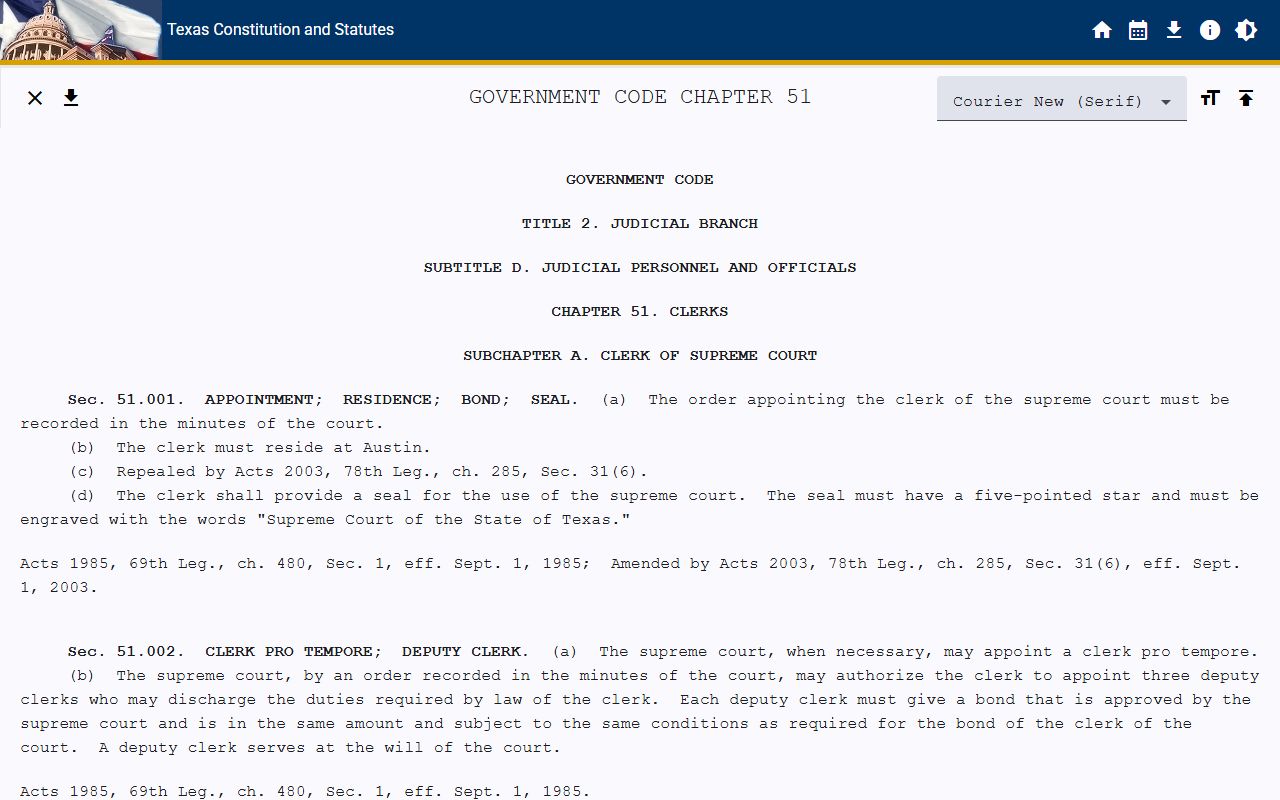
Copy fees are set by each clerk and by state law. The District Clerk charges $1 per page, certified or not, and adds a $5 search fee when you do not know the cause number. A criminal research letter is $5, or $10 certified. The County Clerk charges $1 per page plus a $5 certification fee on certified copies. Court clerk fees in Texas are framed by Government Code Chapter 51.
You can read the state fee provisions at the statutes site, which sets the basic rules clerks follow.
The common copy fees are summed up below.
| Item | Amount |
|---|---|
| Plain copy per page | $1 |
| Certified copy per page | $1 |
| Certification fee | $5 |
| Records search fee (cause number unknown) | $5 |
Note: Fees can change and may differ by division, so confirm the current amount with the clerk before you mail a payment.
How to Interpret McLennan County Court Records
Court files use shorthand that can trip up first-time searchers. A charge is not a conviction. An arrest means a person was booked, while a conviction means a court found guilt and entered a judgment. Watch the disposition line, since it tells you the real outcome. A cause number ties the file together, and a strange date like 01/01/1900 often means the digital record had no real date on hand.
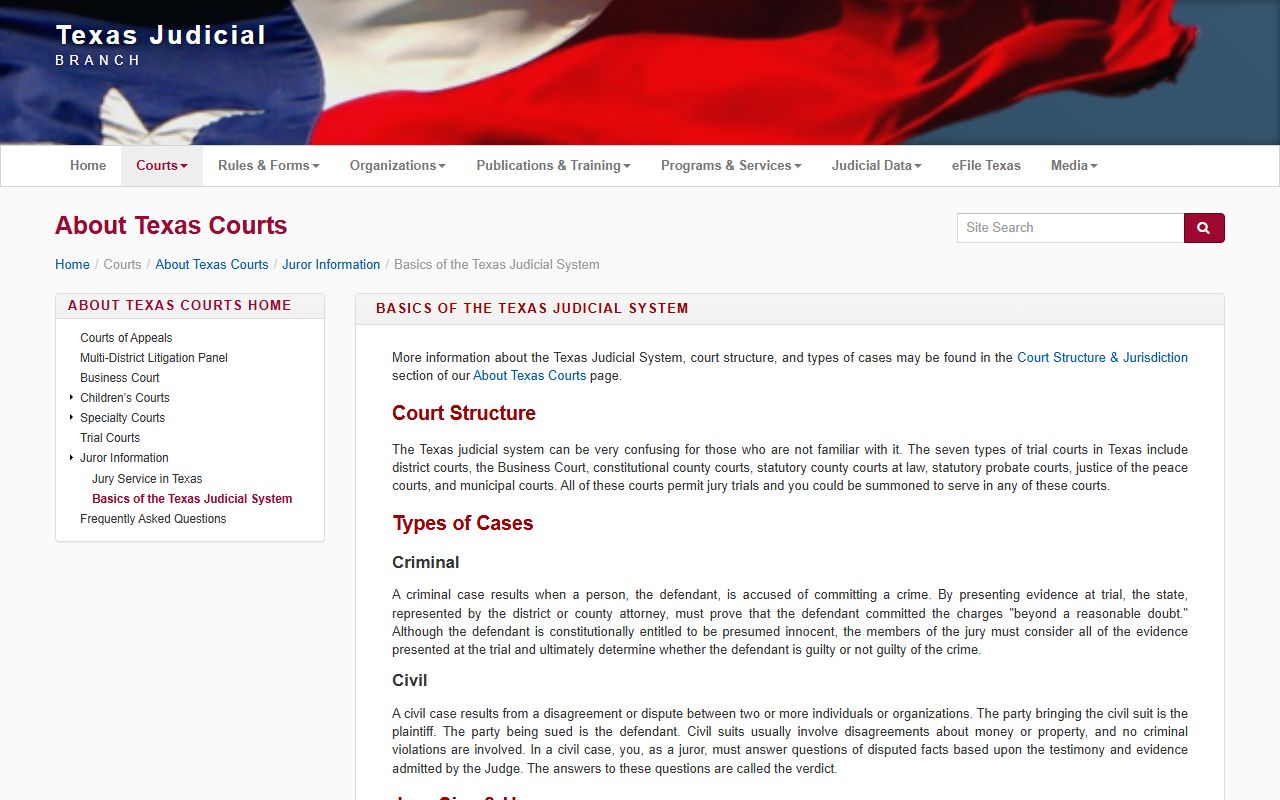
Plain-language guides help when the terms get dense. The Texas Judicial Branch posts a clear set of basics on court terms.
For deeper docket reading, the McLennan County court dockets page breaks down a sample entry line by line.
Accuracy and Record Limitations
Online records lag behind the paper file. The index updates as the clerk enters data, and some older cases hold limited detail online. County records reach back to 1850, but only index information for criminal and civil cases shows from the 1980s and 2001 forward, depending on the system. If a fact looks wrong, call the clerk that holds the file.
Note: Always confirm names, dates, and outcomes with the originating clerk before you rely on an online record for any legal or personal decision.
History of McLennan County Courts
The Texas Legislature created McLennan County in 1850 out of Milam County, and named it for early settler Neil McLennan. Waco, the county seat, began as a Texas Rangers outpost and was known as Waco Village by 1850. The court system grew with the county. Today there are six district courts and three county courts at law, with the 474th District Court serving as the designated juvenile and CPS referring court. The county history page tells the broader story.
You can read the county's own account of its founding and growth.

The digital record timeline shows the shift to online access, with Tyler Self-Service for County Clerk records and E-Doc Technologies for the District Clerk index. See the About the County page for more.
Frequently Asked Questions
How do I search McLennan County district court records?
Use the District Clerk Case Index Search. The county says it covers criminal and civil cases from 2001 forward, plus some converted legacy data from the early 1980s. Public docket sheets are free, but only index information is online. To see the actual document, view it in the District Clerk's office or order a copy. Full case history and steps sit on the court records page.
Who keeps felony records versus misdemeanor records?
Felony records are district court files held by the District Clerk. The 19th and 54th District Courts handle felonies, and the 54th tries felony criminal cases only. Misdemeanor records belong to the County Clerk, who reports that thousands of misdemeanor cases are disposed at the county level each year. For arrest and booking detail, see arrest records.
How do I find a current inmate in the McLennan County Jail?
The Sheriff's Office posts a current inmate listing that updates once an hour, plus an online mugshot search. You can search by name, booking number, book-in date, offense, and more. The roster does not show housing, release dates, or court dates. Full fields and steps are on the inmate records page.
More on the McLennan County Court Records FAQ page.